

PurustusseadmedMingyuan Dry and Wet Ball Mill
Customerizable Model for ball mill plant




Põhiandmed
- Masina nimetus:
- Purustusseadmed
- Tootja:
- Mingyuan Dry and Wet Ball Mill
- Tootmisaasta:
- 2026
- Seisund:
- uus
- Töövõimekus:
- täielikult töökorras
Hind ja asukoht
- Asukoht:
- Dahuangye Industrial zone, XinXing East RD, Gongyi, 451200 Zhengzhou, China
Pakkumise üksikasjad
- kuulutuse ID:
- A14536393
- Värskendus:
- viimati kuupäeval 08.03.2026
Kirjeldus
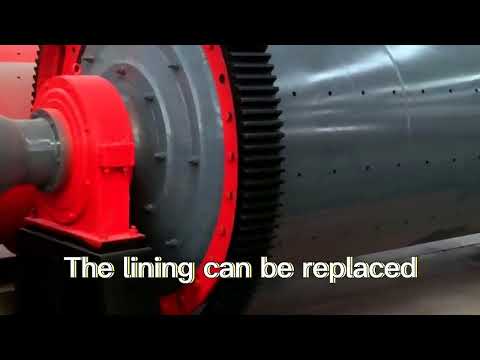
A ball mill is a fundamental grinding device used in mineral processing, cement manufacturing, chemical production, and other industrial applications. It works by rotating a cylindrical shell filled with grinding media—usually steel balls—causing impact and friction that reduce materials to fine powder. Based on the grinding environment, ball mills are classified into dry and wet types, each suited for specific materials and process requirements.
Working Principle
Both dry and wet ball mills operate on the same mechanical principle. The rotating cylinder, driven by a motor through a gear system, lifts the grinding media and material along the inner wall. As the rotation continues, the balls fall under gravity, striking and grinding the material. The difference lies in the presence or absence of a liquid medium during grinding.
Dry Ball Mill
A dry ball mill is used when the material must remain moisture-free or when water could affect product quality. It is commonly applied in cement clinker, limestone, quartz, and refractory material grinding. The discharge can be either grate type or overflow type, depending on the desired fineness.
Lhodeq Nx Alopfx Adcjn
Technical Features:
Feeding size: ≤25 mm
Discharge size: 0.075–0.4 mm
Capacity: 0.65–90 t/h
Liner material: High manganese steel or wear-resistant alloy
Drive system: Gear-driven or direct-coupled motor
Dust control: Equipped with air exhaust and dust collector
Advantages:
Suitable for materials sensitive to moisture
No drying process required after grinding
Lower corrosion risk and simpler maintenance
Easier material classification and separation
Limitations:
Dry grinding produces more dust and heat, requiring efficient ventilation and dust collection systems.
Wet Ball Mill
A wet ball mill operates with water or another liquid medium added to the material. The slurry formed during grinding improves efficiency by reducing friction and preventing excessive heat buildup. It is widely used in ore beneficiation, ceramics, and chemical industries.
Technical Features:
Feeding size: ≤25 mm
Discharge size: 0.074–0.2 mm
Capacity: 0.65–615 t/h
Liner material: Rubber or high-chromium steel
Discharge method: Overflow or grate type
Auxiliary equipment: Classifier, pump, and thickener for slurry circulation
Advantages:
Higher grinding efficiency and finer particle size
Reduced dust and noise levels
Continuous operation suitable for beneficiation circuits
Better control of particle uniformity
Limitations:
Requires drying if the final product must be in powder form and involves more complex slurry handling.
The selection between dry and wet grinding depends on the material characteristics, downstream process, and environmental conditions. Dry mills are preferred for materials that must stay moisture-free, while wet mills are ideal for fine grinding and slurry-based processes.
Conclusion
Dry and wet ball mills share the same mechanical structure but differ in their grinding environment and application scope. The dry type offers simplicity and low maintenance for moisture-sensitive materials, while the wet type provides higher efficiency and finer output for mineral and chemical processing. Understanding their technical parameters and operational differences ensures optimal equipment selection, improved productivity, and reliable performance in industrial grinding operations.
Pakkuja
Registreeritud alates: 2024
50 Kuulutused internetis

Saada päring
Telefon & Faks


 Waldkraiburg
 Hosokawa Alpine400 AFG


 Zheng Zhou Shi
 Double roller crusher /roller sand makerStationary&portable sand crushing plant


 Fuldatal


 Misterton
 VMIHigh shear mixing vessel


 Zheng Zhou Shi
 Rod ball mill / Rod Grinding MillFor Sand and mining beneficiation plant


 Zaleszany
 PGCNC3060ATC 5X


 Zheng Zhou Shi
 Construction waste recycling machineConstruction&demolition management


 Saksamaa
 Alpine630 UP


 Helmond
 GoudsmitSZEB160004


 Schorfheide
 Sonstige/OtherGasparin Prallbrecher GI1010CVR K1R

Machineseeker-usaldusmärk
Mis on usaldusmärk?
Machineseeker sertifitseerib valitud edasimüüjad Machineseeker usaldusmärgisega. Enne väljastamist teostavad kogenud Machineseeker töötajad standardiseeritud ning põhjaliku kontrolli.
Mida me kontrollime?

Äritegevusloa või äriregistri väljavõtte kontrollimine
Müüja
postiaadressi kontrollimine
Pangakonto andmete valideerimine
Põhinumbri
telefonilise
kättesaadavuse kontrollimine
Majandusinfo
ei tohi sisaldada negatiivseid tunnuseid
Ostjate kaebused
võivad tähendada sertifikaadi äravõtmistMida see teie kui ostja jaoks tähendab?
Tänu Machineseeker usaldusmärgisele saate ostjana ilma enda kontrollita ära tunda usaldusväärseid kaupmehi, kes tõenäoliselt teevad ausat ja seaduskuulekat äri.
Loomulikult võivad ostuprotsessi käigus siiski tekkida erimeelsused. Machineseeker ei vastuta seaduserikkumiste eest, mille panevad toime Machineseeker platvormil aktiivsed ostjad või müüjad.